
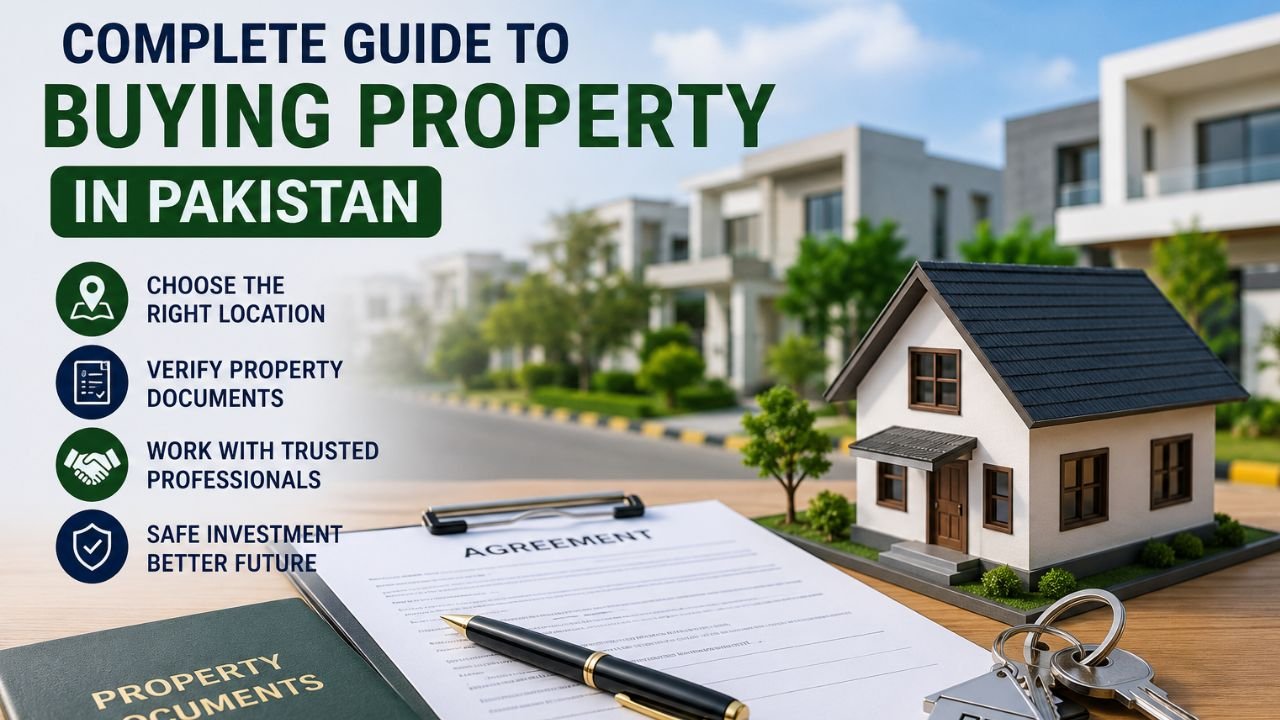
Among the most important financial choices you will make is the purchase of real estate. Knowing the procedure will help you avoid costly mistakes, whether you are buying commercial real estate, investing in a residential plot, or buying your first house. This manual covers the main phases of purchasing real estate in Pakistan and provides practical advice to help protect your investment.
Why Should You Buy Real Estate in Pakistan?
Real estate still counts among Pakistan’s most sought-after investment opportunities. Over time, property usually grows in value; it also offers chances for rental income and acts as a long-term financial asset. Growing urban development and expanding housing societies have also created more investment opportunities across major cities.
Decide on Your Budget
Decide how much you can really pay before you start looking for a house. Your budget ought to cover more than just the purchase price. Think about other costs like these:
- Fees for registration and transfer
- Taxes and Government Dues
- Charges for consultations or agents
- Official paperwork expenses
- Renovation or building expenditures, if appropriate
A well-defined budget limits your possibilities and avoids financial pressure.

Pick the Proper Location
Among the most critical elements in real estate is location. A good site will greatly help your house retain its value in the future.
When assessing a region, bear in mind:
- Availability of hospitals and schools
- Close by marketplaces and retail malls
- Road connectivity and public transportation
- Neighborhood context and security
- Future growth projects
Well-planned residential complexes’ properties usually provide higher long-term returns.
Confirm Travel Papers
Before making any payment, always confirm legal documents and ownership. Ask for copies of the title documents and verify the vendor’s legal authority to sell the property.
Significant papers could comprise:
- Deed of sale or ownership papers
- Allotment or Transfer Letter
- Adopted layout programme
- Seller’s national identification papers
- Property tax records
Should it be required, have a competent real estate attorney go over the paperwork.
Verify the Condition of the Property
Before completing the transaction, make sure the house is free of any borrowings, legal disputes, or encumbrances. You ought to check as well whether every utility bill and development fee has been settled.
Make sure the property is transferable and authorized by the appropriate housing society mapping agency.
Work With a Trusted Real Estate Consultant
By assisting you to: an experienced and trustworthy real estate expert can help to streamline the purchase process
- Identify fit traits
- Discuss a reasonable cost.
- Check paperwork
- Finish any necessary paperwork for the transfer.
- Stay away from fake transactions.
Pick a local real estate expert with a great name.
Inspect the Property Carefully
Look over the state of a house or business structure you are considering before signing the contract. Examine the general upkeep, water supply, electrical systems, plumbing, construction quality, and infrastructure.
Check for plots: the precise placement, size, road access, and surrounding development.
Recognize the Process of Transfer
Officially transferred once the necessary paperwork is completed and government levies paid, ownership of the property. The city, housing society, or development authority determines the transfer process.
Keep copies of each document for future reference and make sure all forms are filled out appropriately.
Stay Away from Errors
Many buyers make unnecessary mistakes during the purchase process. To lower risk:
- Never pay without written approval.
- Check each legal document on its own.
- Steer clear of bargains that seem too good to be true.
- Go over each contract critically before signing.
- Retain transaction receipts.
These measures will help keep your investment safe.
Conclusion
Purchasing real estate in Pakistan requires careful planning, thorough document verification, and sound decision-making. Setting a sensible budget, selecting the correct site, checking legal records, and working with reliable experts will help you have a secure and lucrative investment. Whether you’re buying a house for your family or planning for the future, following the correct procedures can help to guarantee a smooth and safe real estate purchase.
