
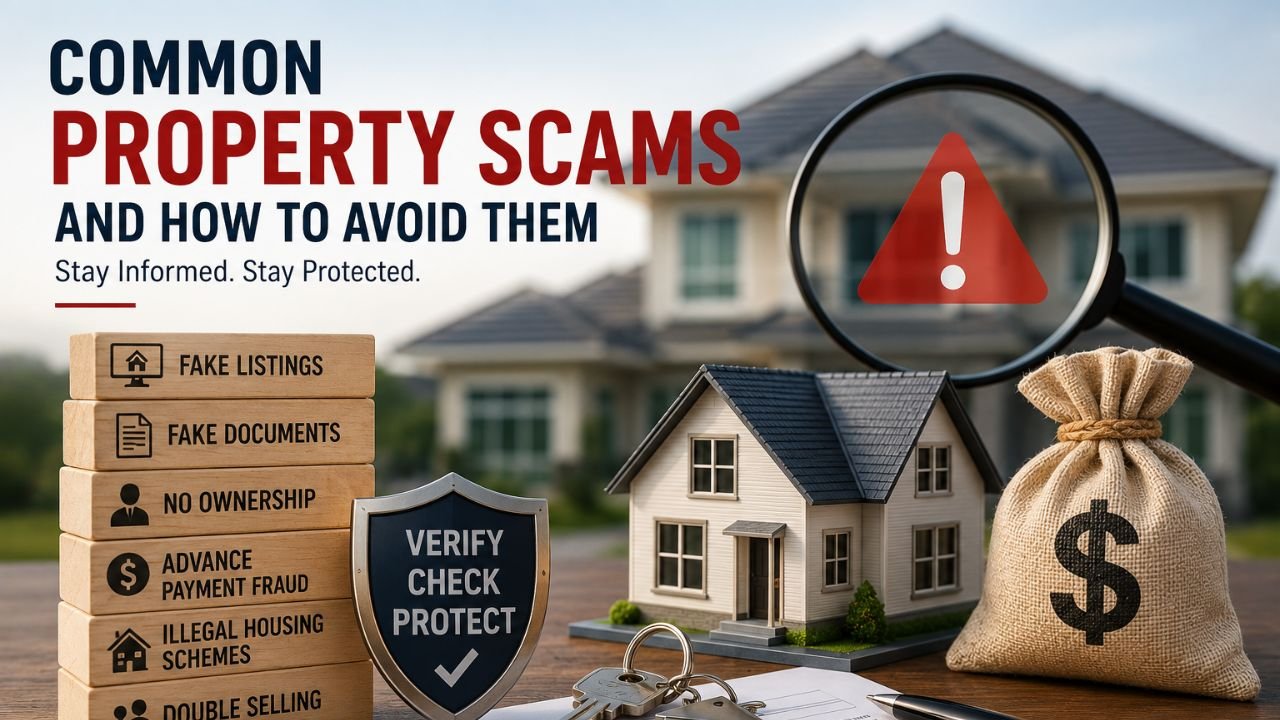
One of the most important financial choices you will ever make is purchasing real estate. Whether you’re buying a house, flat, or land, it’s critical to be watchful of scams. Significant financial losses, legal conflicts, and needless stress can follow from property fraud. The first stage toward preserving your investment is knowing how these schemes operate.
This manual covers the most common real estate scams and offers practical advice to help you avoid them.
False Property Listings
Fake internet listings are among the most common forms of fraud. To draw purchasers, con artists promote enticing homes at below-market rates. Once contacted, they could request a booking fee or upfront payment before permitting a viewing.
How to Steer Clear
- Check the property’s title papers.
- Personally see the property.
- Check the asking price against those of other nearby properties.
- Just deal with trustworthy real estate companies or verified vendors.
Selling Real Estate Without Official Title
Sometimes, scammers try to sell homes or property they do not lawfully own. They can impersonate the legal owner or use false documents.
How to Stay Clear
- Check ownership with the appropriate land or housing authority.
- Examine the seller’s original identification papers.
- Before signing any contract, speak with a knowledgeable property attorney.
Falsified Property Documentation
Commonly used to trick consumers are fake title deeds, transfer letters, and allotment paperwork. Though they seem real, these documents carry changed information.
How to Avoid It
- Check every record with the issuing agency.
- Look over original documents instead of copies.
- Before finalising the transaction, ask a legal professional to go over the paperwork.
Double Selling
In this scam, a dishonest seller sells the same property to several customers by taking deposits from each party before finishing the transaction.
How to stay away from it
- Finish the ownership transfer right away.
- Local property rules should guide the recording of the transaction.
- Check to make sure the land hasn’t already been sold or moved.
Illegal Housing Schemes
Some developers promote residential areas without official approvals or legal legitimacy. Buyers might buy parcels legally unbuildable.
How to Stay Away From It
- Make sure the housing development has all the necessary permissions.
- See if the society has the appropriate development authority’s permission.
- Investigate the developer’s history and reputation.
Advance Payment Deception
Before confirming the paperwork or completing legal procedures, phony artists frequently pressure customers into making a token payment or the full amount.
How to Stay Away From It
- Never pay without written approval.
- Instead of cash, use safe banking channels.
- Maintain records for every payment and receipt.
Rental Property Frauds
In rental scams, someone promotes a property they don’t own or don’t have the authority to rent. Often, victims are asked to make a security deposit before seeing the property.
How to Stay Clear of It
- Before making any payment, go visit the house.
- Talk to the owner or approved representative.
- If at all feasible, check ownership.
Red Flags of a Real Estate Scam
Look out for these typical warning signs:
- Prices that appear strangely cheap.
- Demands for quick settlement.
- Sellers are not ready to furnish original records.
- Sales techniques under High pressure.
- Variable ownership data.
- Refusing permission for property inspections.
If something seems strange, check every last detail before continuing.
Best Standards for Safe Real Estate Transactions
To lower the risk of fraud:
- Seek help from qualified real estate professionals.
- Check all ownership documents with formal authorities.
- Before signing, thoroughly go over agreements.
- Carry out separate market research.
- Avoid decisions made under duress.
- Retain copies of all contracts and payment information.
Why Due Diligence Is Important
Proper due diligence protects both buyers and sellers. Taking time to check paperwork, examine the house, and confirm legal ownership will help to avoid expensive errors. Dealing with high-value property deals, expert legal counsel, and trusted real estate guidance sometimes pays off.
Last Thoughts
Property fraud continues to evolve; hence, awareness is more vital than ever. Confirming ownership, reviewing legal paperwork, looking up developers, and foregoing quick decisions can significantly lower your chance of becoming a victim of fraud.
Whether you’re purchasing your first house or investing in real estate, thorough preparation and due diligence are critical for a safe and effective real estate transaction. Approaching things carefully now can help to preserve your investment for many years to come.