
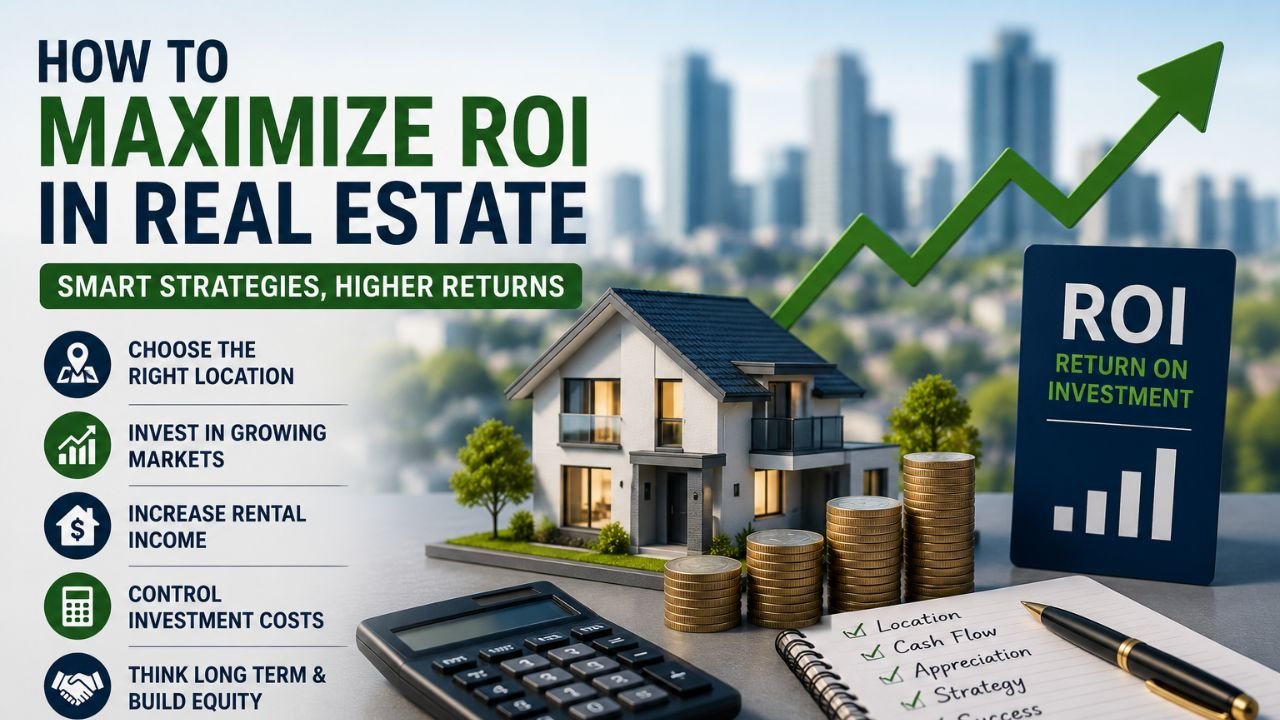
One of the most dependable means of wealth building is real estate. Whether you’re starting a new portfolio or purchasing your first investment property, long-term success depends on optimizing your Return on Investment (ROI). A better return on investment indicates your property is producing more value than you put in.
Making wise judgments will greatly increase your profits in today’s cutthroat sector. These are some workable techniques you could use to maximize your return on investment in real estate.
What ROI?
ROI looks at the profit generated by a property relative to the total investment. It enables investors to assess whether a property is operating appropriately and to weigh several investment options.
Strong ROI depends on several factors, including the purchase price, rental income, upkeep expenses, property value, and the state of the economy.
Select the Appropriate Location
Still among the most important considerations in real estate investing is location. Properties with excellent infrastructure, schools, hospitals, retail complexes, and transit connections usually experience higher demand and stronger price growth.
Before making a purchase, consider any future construction projects and government infrastructure initiatives that might raise property values.
Purchase Under Market Value
Buying property at a reasonable cost is among the simplest ways to increase ROI. Search for driven sellers, pre-launch ideas, or homes in growing regions where future development is anticipated.
Purchasing at the correct cost increases an investor’s likelihood of getting higher profits when property prices rise.
Put money in developing markets.
Long-term investment potential is sometimes higher in areas with ongoing infrastructure projects, new commercial developments, and growing populations.
With rising property values and stronger rental demand, growing markets are appealing choices for investors seeking higher returns.
Boost Rental Income
If your home is leased, increasing rental income will improve overall ROI.
One approach to raise rent value is:
- Maintaining the house properly.
- Renovating bathrooms and kitchens.
- Including contemporary security elements.
- Enhancing the curb appeal and landscape.
- Providing features that draw renters.
Content tenants are also more likely to remain longer, hence shortening vacancy intervals.
Manage Investment Costs
Cutting pointless costs is equally crucial as raising income.
Before you buy a property, figure:
- Purchase cost
- Taxes and transfer charges
- Renovation expenses
- Expenses associated with upkeep
- Insurance
- Fee for property management
A clear budget stops unanticipated expenses from eroding your general profit.
Increase the Range of Your Portfolio
Consider diversifying across multiple property types or locations rather than putting all your money into a single property.
A well-balanced portfolio could include:
- Residential houses
- Properties in business
- Apartments for rent
- Grants for possible improvements going forward
Diversifying helps to lower investment risk and generate many income sources.
Observe Market Cycles
Good investors often keep up with interest rates, government rules, new infrastructure developments, and real estate market developments.
Knowing market conditions enables you to choose the best time to purchase, sell, or hold a property for optimal returns.
Consider the Future
Over time, real estate provides the best returns. Although short-term market changes are normal, well-built homes in good areas usually appreciate over the long run.
- Patient, deliberate preparation will yield much better outcomes than constant buying and selling.
- Collaborate with skilled professionals.
Working with reputable real estate brokers, legal experts, and property consultants will help you avoid costly mistakes. Professional advice helps one make wise investment decisions, ensure accurate property assessments, and ensure proper documentation.
Selecting seasoned professionals helps you maximize your chances of getting better returns and saves time and money.
Conclusions
Getting the most return on investment in real estate calls for more than just buying a house. Choosing the best site, managing expenses, raising property value, keeping up with market trends, and planning for long-term development are among the steps involved. Investors who research extensively and make wise judgments increase their chances of consistent profits and long-term prosperity.
Whether you are buying residential, commercial, or rental homes, a well-organized strategy can enable you to get the most from every real estate opportunity.